
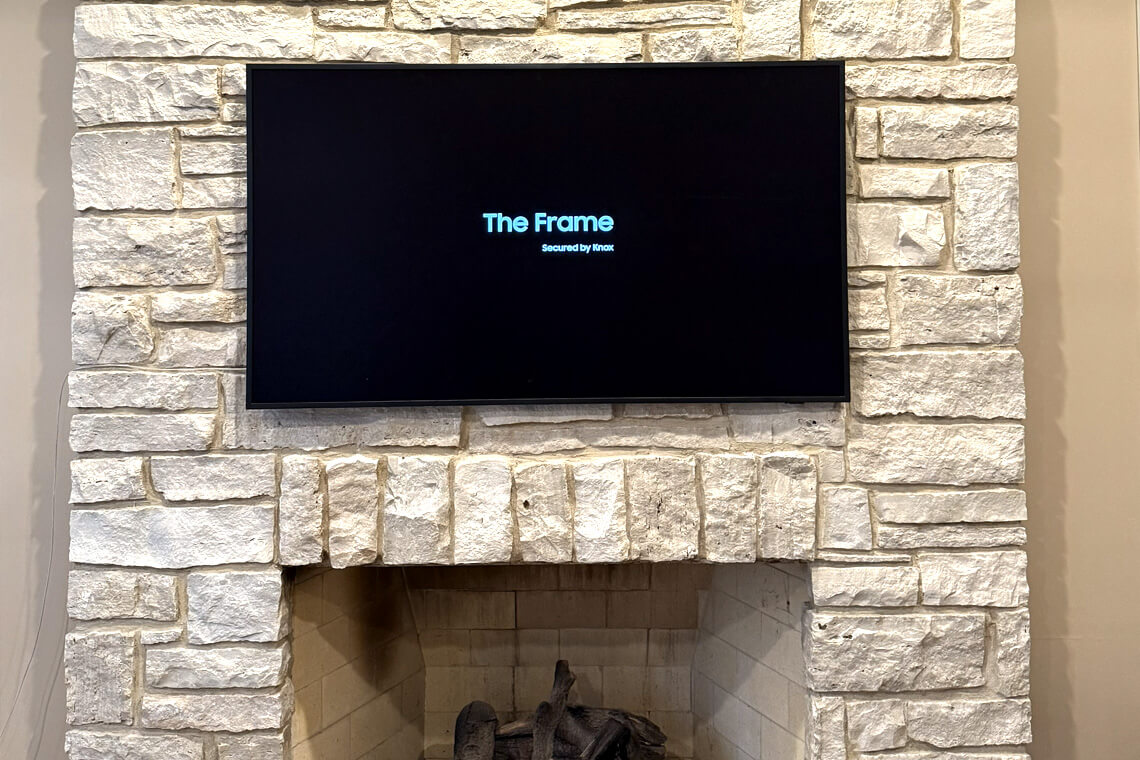
Installing a TV over a fireplace is one of the most requested setups in Chicago homes. It looks clean, saves wall space, and often becomes the visual center of the living room. But it is also one of the easiest ways to ruin comfort, damage a TV, or regret the layout later if it is done wrong.
Chicago homes add their own challenges. Brick fireplaces, gas inserts, older framing, heat output, and room proportions all matter. This guide explains what actually matters, without sales fluff.
Is It Safe to Install a TV Over a Fireplace?
Yes, it can be safe, but only under specific conditions.
Most problems come from three factors that are often overlooked during fireplace TV installations.
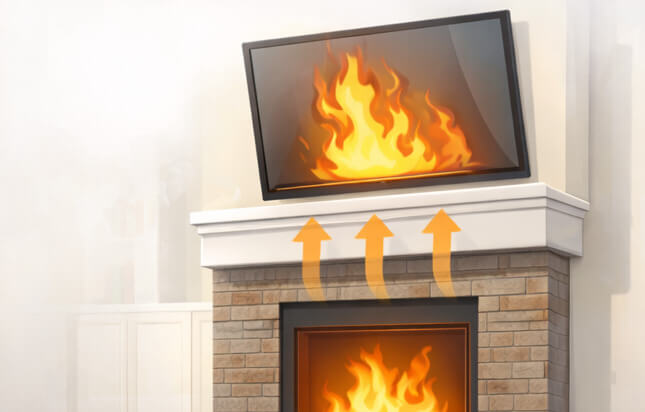
Heat Risk Explained
Fireplaces push hot air upward, directly toward the TV.
Most modern TVs are designed to operate up to 95–104°F.
If the wall above the mantel feels hot to the touch, the TV is at risk.
What helps:
- Deeper mantel to deflect heat
- Heat shield
- Reduced fireplace output
- Pull-down TV mount
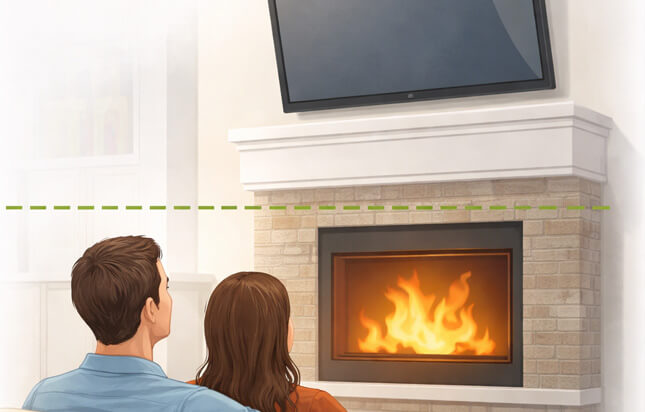
Viewing Height
This is the most common mistake in fireplace TV installations.
TV height should be based on seated eye level, not mantel height.
When mounted above a fireplace, the TV usually ends up too high.
What happens:
- Ideal TV center: 40–42 inches
- Typical mantel height: 48–55 inches
- TV ends up too high
- Neck strain and viewing discomfort
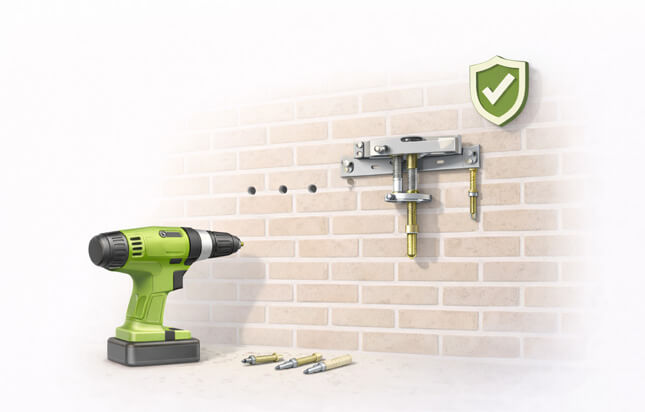
Structural Safety
Most Chicago fireplaces are built from brick or stone.
That means the TV must be mounted into masonry, not drywall.
Proper structure is critical for safety and long-term stability.
What’s required:
- Masonry drilling
- Proper anchors
- No drywall-only mounting
- Secure mounting into brick or stone
How to Fix the Height Problem
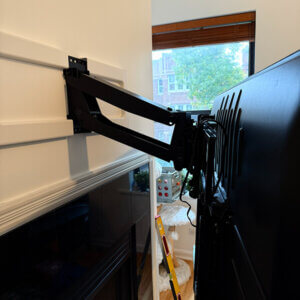
There are only three real options:- Use a pull-down mount This allows the TV to sit high when not in use and lower to a comfortable height when watching.
- Lower or remove the mantel Possible in remodels, difficult in existing Chicago homes.
- Accept a decorative-only TV Honest, but uncomfortable for daily viewing.
Choosing the Right Mount for a Fireplace Install
Fireplace installs are not the place to save money on hardware.
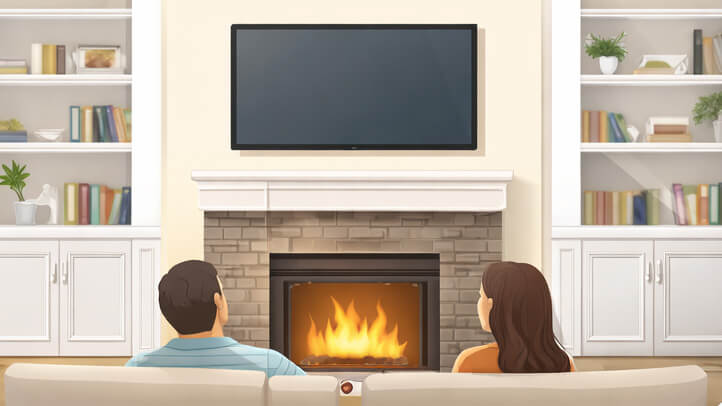
FIXED MOUNTS
Description: Locks the TV in one position. Over a fireplace, that position is usually too high, which makes long viewing uncomfortable.
Best for: Decorative setups or rooms where TV is rarely used.
Watch for: Neck strain and poor viewing angle.
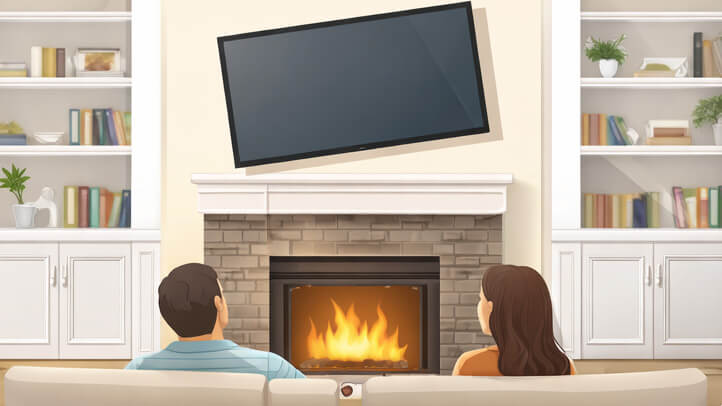
Tilting Mounts
Description: Adds a downward tilt to reduce glare and improve viewing angle slightly, but the TV still stays high above the mantel.
Best for: Occasional watching with longer seating distance.
Watch for: Does not solve the height problem.
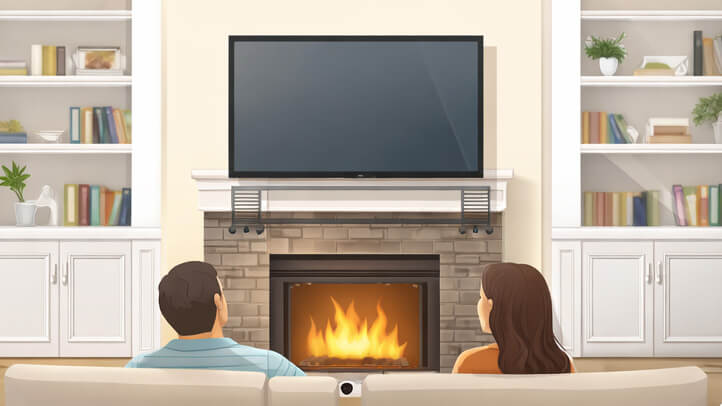
Pull-Down Mounts
Description: Built for fireplaces. The TV stores high, then pulls down to eye level for comfortable daily watching.
Best for: Daily viewing in rooms with a fireplace as the focal point.
Watch for: Needs solid mounting and proper clearance.
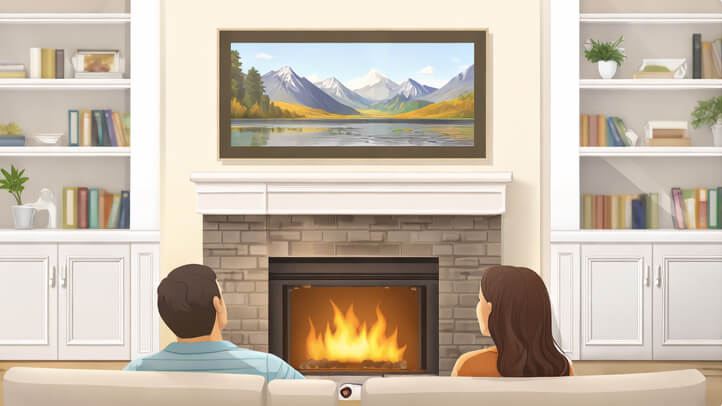
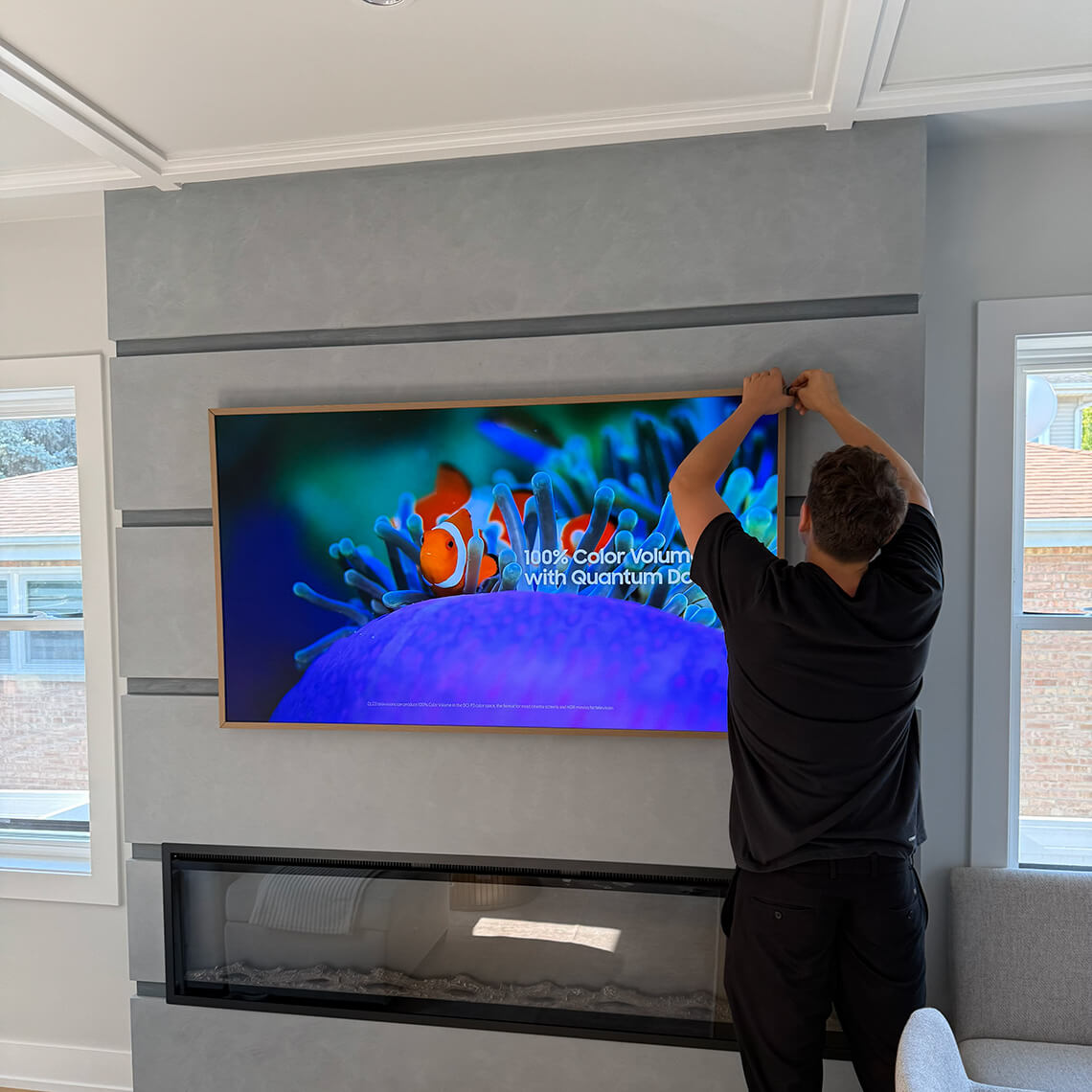
Art-Style Mounts
Description: Made for a flush, artwork-like look. Above a fireplace, the install must be precise to stay perfectly aligned.
Best for: Design-first spaces where the TV is part of the decor.
Watch for: Requires a level surface and planned cable routing.
Heat and Ventilation Considerations
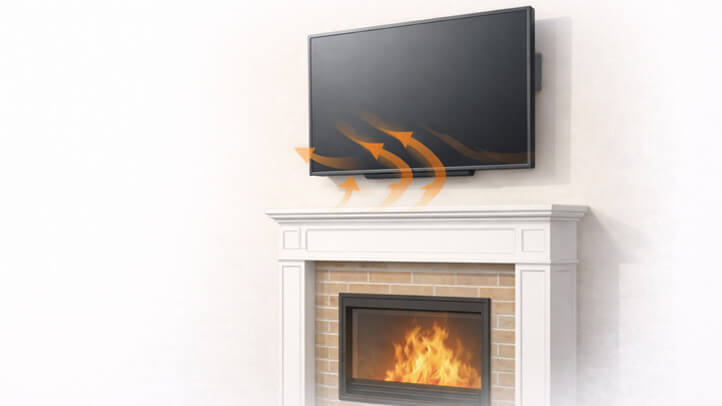
Even moderate heat can shorten a TV’s lifespan over time.
Key rules:
- do not block ventilation
- leave space behind the TV
- use heat-rated recessed boxes only
- run in-wall rated cables
Chicago winters mean fireplaces are used often. Heat management is not optional.
Cables, Power & Clean Installation
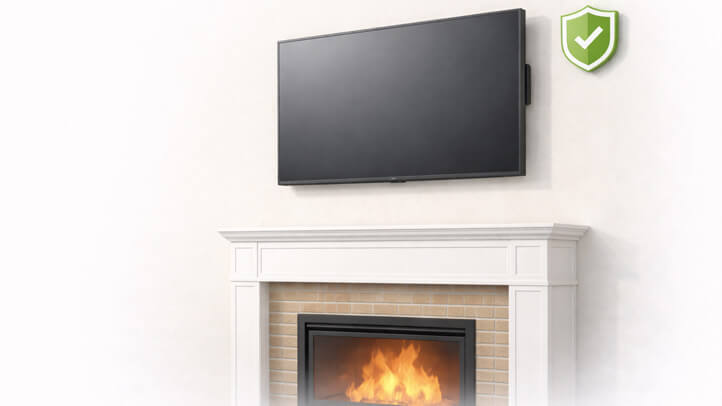
A clean install is just as important as a secure mount.
A proper fireplace TV install includes:
- no visible wires
- recessed outlet or in-wall power kit
- hidden HDMI and low-voltage cables
- future access for upgrades
Surface raceways almost always ruin the look.
When a TV Should NOT Be Mounted Over a Fireplace
This setup is not right for every home.
Avoid it if:
- fireplace produces strong heat
- mantel is very high
- seating distance is short
- TV is large for the room
- TV is used daily for long sessions
In many Chicago homes, a side wall looks better and feels better.
Fireplace TV Installation – Common Questions
Is it actually a good idea to mount a TV over a fireplace?
Sometimes yes, sometimes no. It depends on how hot your fireplace gets, how high the TV will sit, and what the wall is made of. There’s no universal answer.
How can I tell if heat will be a problem?
Turn the fireplace on for 30–60 minutes. If the wall above the mantel feels hot to the touch, the TV will be exposed to heat over time. That’s a red flag.
Why do people complain about neck pain with fireplace TVs?
Because fireplaces are usually higher than eye level. When a TV is mounted too high, your neck is tilted upward for long periods, which quickly becomes uncomfortable.
Can a pull-down mount really fix the height issue?
In many cases, yes. Pull-down mounts allow the TV to sit lower when in use and return above the fireplace when not needed.
What kind of wall is usually behind a fireplace?
Most fireplaces are brick or stone, even if drywall is visible around them. TVs must be anchored into masonry, not just drywall.
Is hiding the cables just about looks?
No. It’s also about safety and reliability. Proper in-wall power and HDMI solutions prevent loose cords, overheating, and future issues.
Are surface cable covers a bad idea?
They work, but they almost always look out of place above a fireplace. Most homeowners regret them after installation.
Are there cases where mounting a TV over a fireplace is a bad idea?
Yes. Some fireplaces get too hot, sit too high, or simply aren’t built for it. In those cases, another wall is the better option.